Stop Overcomplicating Meal Prep: A Repeatable System That Saves Time and Money
If you've ever searched for "weekly meal prep simple," you've probably seen endless lists of 60 healthy ideas or 100 budget-friendly recipes. But here's the thing nobody tells you: the problem isn't a lack of recipes-it's a lack of a system. Most people burn out because they try to prep 12 different meals, buy exotic ingredients they never use again, and end up throwing away spoiled food by Thursday.
I've been there. When I first started meal prepping for my family of four, I spent four hours every Sunday making five different dinners. By Wednesday, we were ordering pizza because we were sick of leftovers. That's when I developed the 3-3-3 framework: prep three proteins, three starches, and three vegetables, then mix and match throughout the week. It's the simplest, most sustainable method I've found-and it works whether you're cooking for one or six.
This guide gives you the exact system, with a $100 weekly shopping strategy for a family of four, a safety cheat sheet so nothing goes to waste, and a sample template you can start using this Sunday. No fluff, no 100-item list-just a repeatable routine that actually sticks.
What Is the 3-3-3 Rule for Meal Prep? (And Why It's the Only Method Beginners Need)
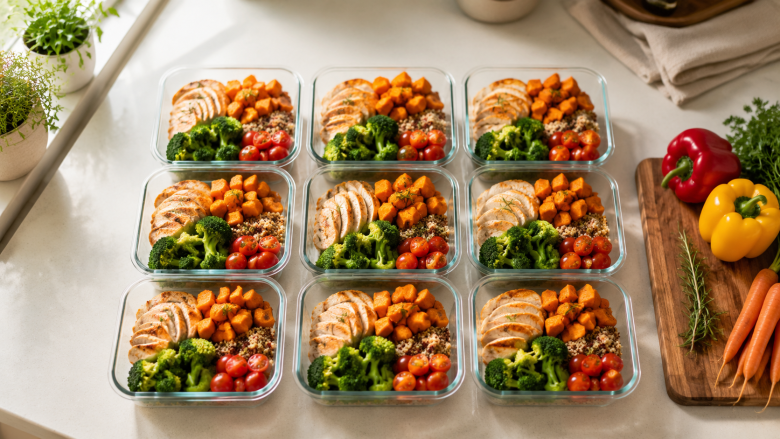
The 3-3-3 rule is simple: each week, you prepare three different proteins, three different starches, and three different vegetables. That's it. You cook them all in one session (about 90 minutes), store them separately, and then assemble meals on the fly.
Here's why this works better than traditional meal prep where you make full meals in advance:
- Variety without waste: Instead of eating the same chili five days in a row, you can combine chicken with rice and broccoli one night, then chicken with quinoa and roasted peppers the next. Each combination feels like a different meal.
- Flexibility for picky eaters: Kids can skip the vegetable they don't like without derailing the whole meal. You just swap in a different veggie from your prepped stash.
- Less decision fatigue: You only choose 9 items to prep. No scrolling through 60 recipes. No agonizing over which meal to cook on which night.
Most people don't realize that the biggest barrier to meal prep isn't the cooking-it's the planning. The 3-3-3 rule eliminates that upfront mental load. You decide your proteins, starches, and veggies based on what's on sale, what's in season, or what you already have. Then you cook them all using the same few techniques (roast, sauté, boil) to keep cleanup minimal.
My First Attempt: The 12-Recipe Disaster
The thing nobody tells you about weekly meal prep is that you will fail-hard-the first few times if you try to be a hero. I remember my first serious attempt: I printed out 12 different recipes, bought $180 worth of groceries, and spent six hours cooking. By the end, my kitchen looked like a war zone, and I had enough food for two weeks. But by day four, the leftover stir-fry had turned into a science experiment, and the enchiladas had been eaten by my husband's coworkers. The lesson? Scale down and systematize.
That's why I now teach the 3-3-3 method to every beginner I know. It forces you to cook in bulk without making full meals. You're just prepping components. And components are far more forgiving than finished dishes.
Is It Okay to Meal Prep for a Full Week? (Safety Rules You Can't Ignore)
This is the most common question I get, and the answer is: it depends on what you prep and how you store it. The USDA guidelines state that cooked food can be safely stored in the refrigerator for 3-4 days. So if you meal prep on Sunday for the entire week, anything you plan to eat on Friday or Saturday should be frozen.
Here's a simple safety cheat sheet I follow:
- Refrigerator (3-4 days): Cooked proteins, roasted vegetables, grains like rice and quinoa. I prep on Sunday and eat these Monday through Wednesday/Thursday. Anything beyond day 4 goes into the freezer.
- Freezer (up to 3 months): Portioned proteins, cooked grains, and sturdy vegetables like roasted sweet potatoes. Soups, stews, and saucy dishes freeze beautifully. I freeze individual portions in labeled containers so I can pull one out for a quick lunch or dinner.
- What NOT to prep a week ahead: Fresh salads (dress them day-of), avocado (browns quickly), cooked pasta that will get mushy, and delicate herbs. Prep these just before eating.
One edge case: if you're meal prepping for a family of four and you know you'll eat everything within 3-4 days (e.g., Monday-Thursday), you can keep it all in the fridge. But if you're cooking for two or someone travels, always freeze half. I learned this the hard way when I found a container of chicken buried in my fridge after 10 days. Trust your nose-if it smells off, throw it out.
For a deeper dive on setting up a sustainable routine, check out our Easy Weekly Meal Prep Routine for Wellness guide-it covers timing and storage in more detail.
How to Feed a Family of 4 for $100 a Week: A Realistic Shopping Strategy
Feeding a family of four on $100 a week is absolutely doable if you follow two principles: choose cheap proteins and cook from scratch. The average American family spends about $250-$300 per week on groceries, but with strategic meal prep, you can cut that by more than half.
Here's the $100 weekly breakdown I use for my own family (prices will vary by region, but these are typical for the Midwest):
- Proteins ($35): 2 lbs chicken thighs ($8), 1 lb ground turkey or beef ($5), 2 cans black beans ($2), 1 dozen eggs ($3), 1 lb pork shoulder or cheap cut ($12), 1 lb Greek yogurt ($5).
- Starches ($15): 5 lbs rice ($4), 2 lbs potatoes ($3), 1 loaf whole wheat bread ($3), 1 box oats ($3), 1 bag flour tortillas ($2).
- Vegetables ($25): 3 lbs carrots ($3), 2 lbs onions ($2), 1 head cabbage ($2), 2 lbs broccoli ($4), 1 bag frozen spinach ($2), 2 bell peppers ($3), 1 bag frozen mixed vegetables ($2), 1 head garlic ($1), 1 bunch cilantro ($1), 1 lemon ($1), 1 bag apples ($4).
- Pantry staples ($15): Oil, salt, pepper, cumin, chili powder, soy sauce, vinegar, peanut butter, canned tomatoes.
- Milk/dairy ($10): 1 gallon milk ($4), 1 block cheddar cheese ($5), butter ($1).
Total: roughly $100. This assumes you already have basics like flour, sugar, and spices. The key is to buy in bulk, use frozen vegetables when fresh is expensive, and choose cheaper cuts of meat like chicken thighs and pork shoulder. Slow-cooker recipes are your best friend-they turn tough, cheap cuts into tender meals.
Sample $100 Weekly Menu (Using the 3-3-3 Method)
Here's exactly how that shopping list translates into a week of meals. I prep on Sunday using the 3-3-3 framework:
- Proteins: Shredded chicken (from thighs), seasoned ground turkey, and hard-boiled eggs.
- Starches: Brown rice, roasted potatoes, and oatmeal (for breakfast).
- Vegetables: Roasted broccoli, sautéed cabbage with carrots, and a bag of frozen mixed veggies.
Meal assembly during the week:
- Monday: Chicken + rice + roasted broccoli (drizzle with soy sauce).
- Tuesday: Ground turkey + rice + sautéed cabbage (add cumin and chili powder for a taco bowl).
- Wednesday: Hard-boiled eggs + roasted potatoes + mixed veggies (frittata or scramble).
- Thursday: Chicken + roasted potatoes + broccoli (add cheese and sour cream if available).
- Friday: Ground turkey + cabbage + rice (make lettuce wraps if you have lettuce).
- Saturday/Sunday: Use leftover chicken or turkey in a soup with frozen veggies and canned tomatoes.
Breakfasts are oatmeal with milk and apples, or eggs and toast. Lunches are leftovers from dinner. By using the same components, you never get bored-each combination tastes different because the seasoning or sauce changes.
If you're new to meal prep, I recommend starting with our Beginner's Guide to Light Weekly Meal Prepping-it walks you through the first week with even fewer ingredients.
What Is a Good Weekly Meal Plan? (The 3-3-3 Template You Can Copy)
A good weekly meal plan isn't a rigid schedule of specific recipes. It's a flexible framework that adapts to what you have, what you like, and how much time you have. Here's the exact template I use, based on the 3-3-3 method.
Sunday: Prep Day (90 minutes)
- Step 1: Choose your 3 proteins. Example: boneless chicken thighs, ground beef, canned black beans.
- Step 2: Choose your 3 starches. Example: brown rice, sweet potatoes, whole-wheat pasta.
- Step 3: Choose your 3 vegetables. Example: broccoli, bell peppers, frozen spinach.
- Step 4: Cook everything. Roast chicken thighs at 400°F for 25 minutes. Cook ground beef in a skillet with taco seasoning. Boil rice. Roast sweet potatoes and broccoli (same pan, different timing). Sauté bell peppers. Thaw spinach.
- Step 5: Portion into containers: each protein and starch goes into its own container. Vegetables can be combined or separate. Label with date.
Monday-Friday: Mix and Match
Each night, pick one protein, one starch, one veggie, and add a sauce or seasoning to make it feel different. For example:
- Monday: Chicken + rice + broccoli + soy sauce and sesame oil.
- Tuesday: Ground beef + sweet potatoes + spinach + sour cream and salsa (taco bowl).
- Wednesday: Black beans + pasta + bell peppers + jarred marinara (quick pasta).
- Thursday: Chicken + sweet potatoes + broccoli + curry powder and coconut milk.
- Friday: Ground beef + rice + bell peppers + Sriracha and lime (burrito bowl).
Pro tip: Cook double the amount of one protein or starch on Sunday, then freeze half for the following week. That way, your prep time drops to 45 minutes the next Sunday.
Common Mistakes Even Experienced Preppers Make (And How to Avoid Them)
Even after years of meal prepping, I still slip up. Here are the three pitfalls I see most often-and the fixes that work.
Mistake #1: Prepping Too Much Fresh Produce
You buy a head of lettuce, chop it all up on Sunday, and by Wednesday it's a sad, brown mess. Fix: Only prep sturdy vegetables like carrots, cabbage, broccoli, and bell peppers. Leave delicate greens whole and wash them the day you eat them. For salads, prep the components (dressing, toppings, protein) but assemble fresh.
Mistake #2: Using the Same Seasoning for Everything
If all your proteins are seasoned with just salt and pepper, every meal tastes the same. Fix: Season each protein differently. I do one with garlic and herbs, one with soy sauce and ginger, and one with chili and cumin. That way, even if you eat chicken three times, it tastes different each time.
Mistake #3: Forgetting to Freeze Before It's Too Late
You think, "I'll eat that leftover chicken on Saturday," but by Friday it's borderline. Fix: On Wednesday evening, take stock of what's left. Freeze anything you won't eat by Thursday. I use a simple rule: if it's day 3 since prep, freeze half. This prevents waste and gives you emergency meals for busy weeks.
The Trade-Offs: When Meal Prepping for a Week Isn't Ideal
I want to be honest: the 3-3-3 system isn't perfect for everyone. If you absolutely hate leftovers, you might prefer prepping just 2-3 days' worth and cooking fresh the rest of the week. That's fine. The framework still works-just prep smaller batches.
Another trade-off: if your family has wildly different dietary needs (e.g., one person is keto, another is vegan), the 3-3-3 method becomes harder because you need more components. In that case, I recommend prepping a few neutral bases (plain rice, plain chicken, roasted vegetables) and letting each person customize with sauces and add-ons.
Finally, the $100 weekly budget assumes you live in an area with affordable groceries and you have a well-stocked pantry. If you're in a high-cost-of-living area or have dietary restrictions (gluten-free, dairy-free), your budget will be higher. The framework still applies-just adjust the numbers.
Your First Week: A Step-by-Step Action Plan
Ready to start? Here's exactly what to do this weekend:
- Friday: Check your pantry and fridge. Note what you already have (rice, spices, frozen veggies).
- Saturday morning: Write down your 3 proteins, 3 starches, 3 vegetables. Use the $100 shopping list above as a template.
- Saturday afternoon: Go grocery shopping. Stick to your list-don't impulse buy.
- Sunday afternoon: Set aside 90 minutes. Put on music or a podcast. Cook everything as described in the template.
- Sunday evening: Portion into containers. Label with date. Put 3 days' worth in the fridge, the rest in the freezer.
- Monday morning: Grab a container for lunch. Assemble dinner in 10 minutes.
That's it. No complicated recipes. No special equipment. Just a system that works because it's simple enough to stick with.
After you've done it for two weeks, you'll start noticing patterns-you'll know which proteins freeze best, which vegetables last longest, and which combinations your family loves. That's when meal prep stops being a chore and becomes second nature.