Why Chair Exercises? (And Does It Really Work?)
When I first started working with older adults six years ago, I was skeptical about chair exercises. Can sitting in a chair really build strength or improve balance? I remember watching a 78-year-old woman named Jean, who had fallen twice in the previous year, complete a 10-minute seated routine. Three months later, she walked up a flight of stairs without holding the railing. That's when I became a believer.
But the question isn't just anecdotal. Research backs it up. A 2019 study published in the Journal of Aging and Physical Activity found that a 12-week chair-based exercise program significantly improved lower-body strength, balance, and mobility in adults over 70. Another trial from the Archives of Gerontology and Geriatrics showed that chair exercises reduced fall risk by 34% in community-dwelling seniors.
Does the chair workout for seniors really work? Yes, but with a caveat: it works best when combined with standing activities (when safe) and when performed consistently. Chair exercises alone won't fully reverse sarcopenia (age-related muscle loss), but they are an excellent starting point or maintenance option for those with limited mobility. The key is progressive overload - gradually increasing repetitions or adding resistance bands.
Most people don't realize that chair exercises can also improve cardiovascular health. Seated marching, for instance, raises your heart rate enough to qualify as moderate-intensity activity if you do it briskly. That's a huge win for seniors who can't walk on a treadmill.
What Makes a Chair Exercise Program Effective?
Over the years, I've tested dozens of routines with clients. A good program must include four elements:
- Strength - exercises that target legs, arms, core, and back. Examples: seated leg extensions, bicep curls with resistance bands, seated Russian twists.
- Balance - even while seated, you can challenge balance by lifting one foot off the floor or shifting weight side to side. This trains the vestibular system.
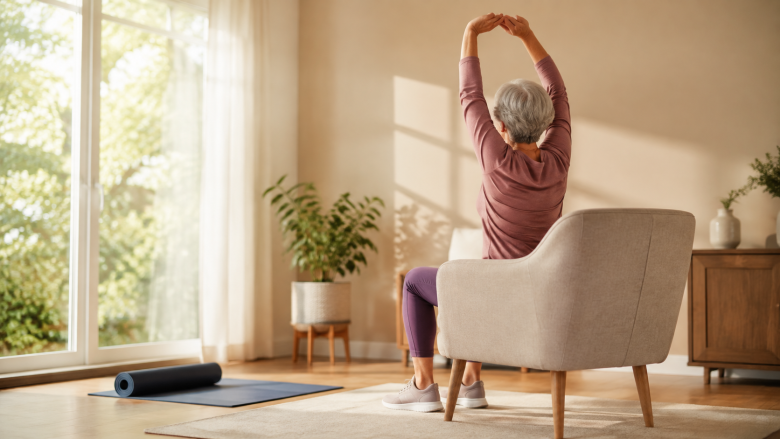
- Flexibility - dynamic stretches for the neck, shoulders, hips, and ankles. Static holds at the end of a session.
- Cardiovascular - seated marching, arm circles, or alternating heel taps to get the blood pumping.
A common mistake I see is focusing only on arm movements. The lower body is where most strength and balance gains happen. If you're only doing arm circles, you're missing the biggest benefit.
Is There a Totally Free Chair Exercise App?
Yes, several free apps exist, but "totally free" often means ad-supported or limited content. Here are three I've used personally and with clients:
SilverSneakers GO
This app is completely free if you have a SilverSneakers membership (often included with Medicare Advantage plans). Even without the membership, they offer a 7-day free trial. The chair exercise routines are led by certified instructors, last 10-20 minutes, and include seated modifications. The app also tracks your progress and offers a 28-day challenge. Downside: without the paid membership, you lose access after the trial. But if you qualify, it's the best free option.
NHS Fitness Studio
Produced by the UK's National Health Service, this app is 100% free with no ads. It includes a dedicated "Seated Exercise" category with 10- and 15-minute routines. The videos are clear, slow-paced, and include a warm-up and cool-down. I recommend this for beginners because the instructions are simple and the production quality is high. The only limitation is the small library - about 12 seated workouts total.
HASfit (Health and Strength fitness)
HASfit offers a free app with a huge library of chair exercise videos, including 20-minute full-body routines. The app has ads, but they are not intrusive. What I like: the instructors are energetic and offer modifications for different fitness levels. The downside is that the app's interface feels dated, and some workouts are not clearly labeled as "chair" - you have to search. But the content is solid.
Which one should you pick? If you have Medicare, start with SilverSneakers GO. If not, the NHS Fitness Studio is the safest bet for a no-strings-attached free experience. For variety, HASfit is a good second choice.
What Is the Best Chair Exercise Program for Seniors?
There is no single best program. The right choice depends on your goals, fitness level, and preferences. Let me break down the three most popular programs I've seen and used.
Sit and Be Fit
Founded by Mary Ann Wilson, a registered nurse, this program is the gold standard for chair exercises. It's been on PBS for decades. The program includes full-length episodes (30 minutes) that focus on all four components: strength, balance, flexibility, and cardio. The routines are gentle, safe, and evidence-based. The website offers free streaming of many episodes. Best for: seniors who prefer a structured, medical-grade approach. Not ideal for those who want high-energy music or fast-paced workouts.
HASfit Chair Exercises
HASfit's chair workouts are more vigorous than Sit and Be Fit. They often use resistance bands and dumbbells (or water bottles). The instructors are younger and more motivating. The workouts range from 15 to 45 minutes. Best for: seniors who are comfortable with moderate intensity and want to build noticeable strength. Not ideal for absolute beginners or those with joint pain.
SilverSneakers Classic
If you have access to SilverSneakers classes (in-person or online), their classic chair workout is excellent. It's a 45-minute class that includes a chair component for the entire session. The exercises are well-researched and modified for arthritis and other conditions. The program is led by certified instructors who check form. Best for: seniors who want social interaction and professional guidance. Not ideal for those who prefer privacy or flexible timing.
When choosing a program, consider these criteria: does it offer progression? Can you add more repetitions or heavier weights? Does it include balance work? Is the instructor certified? I've seen programs that are nothing but gentle arm waving - they don't challenge the body enough to make a difference. Look for programs that make you slightly out of breath (for cardio) or cause muscle fatigue by the last rep (for strength).
The 28-Day Chair Exercise Program for Seniors: A Sample Schedule
I've designed many 28-day plans for clients. The structure below is a proven template that balances all four components while allowing for rest and recovery. This is not a rigid prescription - adjust based on your energy level and any pain. The thing nobody tells you about chair exercise programs: consistency matters far more than intensity. Doing 10 minutes every day beats 60 minutes once a week.
Week 1: Foundation
- Day 1: 10-minute seated cardio (marching, arm circles, heel taps). 5 minutes of stretches (neck rolls, shoulder shrugs, ankle circles).
- Day 2: 10-minute strength: seated leg extensions, bicep curls (use canned goods), seated rows (using a resistance band or towel).
- Day 3: Rest or gentle walking.
- Day 4: 10-minute balance: seated alternating leg lifts, toe taps, and shifting weight from side to side while holding chair edges.
- Day 5: Repeat Day 1.
- Day 6: 10-minute full body: combine strength and cardio (e.g., 30 seconds of marching, then 30 seconds of leg extensions).
- Day 7: Rest.
Week 2: Build Consistency
- Day 8: 15-minute seated cardio (add arm swings, punch moves).
- Day 9: 15-minute strength: add 2 sets of each exercise. Use a resistance band if available.
- Day 10: Rest.
- Day 11: 15-minute balance: now try single-leg stands (with chair support) for 5-10 seconds each leg.
- Day 12: Repeat Day 8.
- Day 13: 15-minute full body.
- Day 14: Rest.
Week 3: Increase Intensity
- Day 15: 20-minute seated cardio: faster marching, add side leg lifts.
- Day 16: 20-minute strength: 3 sets of each exercise. Use heavier resistance (e.g., 2-lb dumbbells or water bottles).
- Day 17: Rest.
- Day 18: 20-minute balance: incorporate seated yoga poses like seated cat-cow and seated twist. Hold each for 15 seconds.
- Day 19: Repeat Day 15.
- Day 20: 20-minute full body: circuit style (30 seconds work, 10 seconds rest).
- Day 21: Rest.
Week 4: Challenge Yourself
- Day 22: 25-minute seated cardio: add intervals - 1 minute moderate, 30 seconds fast.
- Day 23: 25-minute strength: combine upper and lower body in one set (e.g., leg extension + bicep curl at same time).
- Day 24: Rest.
- Day 25: 25-minute balance: try closing your eyes during seated exercises (only if safe). This challenges proprioception.
- Day 26: Repeat Day 22.
- Day 27: 25-minute full body: include all previous exercises. Aim to complete without stopping.
- Day 28: Rest or light stretching. Celebrate your progress.
What happens if you miss a day? Don't double up the next day. Just pick up where you left off. The 28-day program is a guide, not a punishment. I've had clients who only did 3 days a week and still saw improvement in their ability to get out of a chair or walk to the mailbox.
If you want to track the energy expenditure of these workouts, you can use our Exercise Calories Vigorous Intensity Calculator to estimate how many calories you're burning during seated cardio intervals. It's a helpful tool to see that even light activity adds up over the month.
Safety First: What Can Go Wrong and How to Avoid It
Chair exercises are low-risk, but not zero-risk. I've seen people hurt themselves by doing the wrong thing. Here are the most common pitfalls:
- Using a chair that's unstable. A dining chair with four legs is best. Avoid rolling office chairs or sofas. The chair should be on a non-slip surface.
- Leaning too far forward or backward. Keep your hips at the back of the seat, and your feet flat on the floor. If you lean forward during leg lifts, you strain your lower back.
- Holding your breath. Many seniors unconsciously hold their breath during exertion. Exhale on the effort (e.g., exhale when lifting your leg).
- Ignoring pain. There's a difference between muscle fatigue and joint pain. Sharp pain in the knee, hip, or shoulder means stop. Modify the range of motion.
- Not warming up. A 2-minute warm-up (neck rolls, shoulder shrugs, ankle circles) reduces the risk of muscle strain. Don't skip it.
When I first tried working with a client who had severe osteoporosis, I made the mistake of having her twist her spine during seated rotations. That can be dangerous. Now I always teach: rotate from the ribcage, not the lower back. It's a small adjustment that prevents fractures.
How to Choose the Right Program for You (A Decision Framework)
Here's a simple framework I use with clients:
- If you are a beginner or have chronic pain: Start with Sit and Be Fit or NHS Fitness Studio. Focus on Weeks 1-2 of the 28-day plan.
- If you have some strength and want to build muscle: Use HASfit chair workouts with resistance bands. Aim for Weeks 3-4.
- If you have access to SilverSneakers: Use their app and in-person classes. The social aspect is a huge motivator.
- If you want variety and don't want to pay: Combine NHS Fitness Studio (for form) with HASfit (for intensity).
I also recommend doing a simple self-test before starting: stand up from your chair without using your hands. If you can't, your leg strength is a priority. Focus on seated leg extensions and squats (partial squats, keeping your bottom near the chair). That single movement - standing up - is the most functional exercise you can improve.
Beyond the 28 Days: How to Keep Progressing
After 28 days, you'll likely feel stronger. But plateaus happen. Here's how to keep improving:
- Increase resistance: use heavier dumbbells, resistance bands, or ankle weights.
- Increase time: extend workouts from 20 to 30 minutes.
- Decrease rest: shorten the rest between exercises from 30 seconds to 15 seconds.
- Try standing exercises: if it's safe, start doing some exercises standing while holding the chair for balance. This is a natural progression.
One client of mine, 82-year-old Frank, did the 28-day plan and then transitioned to a standing program using a chair for support. Within six months, he could walk his dog for a mile without a cane. That's the real goal - not just a number on a calendar, but a real improvement in daily life.
Common Misconceptions About Chair Exercises
Misconception 1: "Chair exercises are only for disabled people." Wrong. Many athletes use seated exercises for rehabilitation. The chair is a tool, not a label.
Misconception 2: "You can't get a good workout sitting down." Try doing 3 sets of 15 seated leg extensions with a resistance band. Your thighs will burn. The heart rate can reach 100-110 bpm during seated marching. That's a solid workout.
Misconception 3: "You don't need to warm up or cool down." Because you're seated, it's tempting to jump straight into exercises. But muscles and joints still need preparation. A 2-minute warm-up and 2-minute cool-down are non-negotiable.
Misconception 4: "All chair exercise programs are the same." As I've shown, there's a huge difference between a gentle arm-circling routine and a progressive strength program. Read the descriptions, watch a preview, and choose one that aligns with your goals.
Final Thoughts
Chair exercises are not a magic bullet, but they are a powerful tool. I've seen too many seniors avoid exercise because they think they can't do it standing. That's a tragedy. A chair removes the fear of falling and allows you to build the strength and balance you need to eventually stand and walk more confidently.
If you're unsure where to start, pick one free app, sit in a sturdy chair, and try the 10-minute NHS Fitness Studio routine. Do it tomorrow. Then the next day. In 28 days, you'll notice a difference - perhaps in how easily you get up from the dinner table, or how much longer you can walk before feeling tired. That's the real test. And it works.