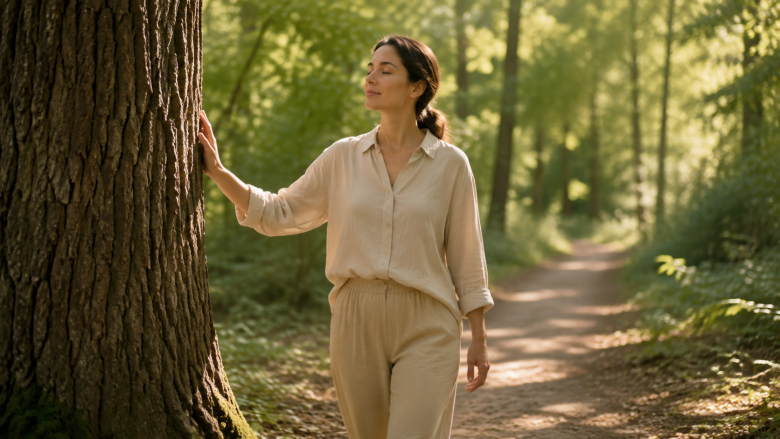
Why 10 Minutes of Mindful Walking Changes More Than You Think
When I first tried mindful walking, I made the mistake of thinking I needed an hour of silent forest time to reap any real benefit. I was wrong. After a single 10-minute session-on a noisy city sidewalk, no less-I felt a shift that surprised me. My shoulders dropped from my ears. The mental chatter quieted. And I realized: the minimum effective dose is far smaller than most guides suggest.
In this field guide, I'll show you exactly what a 10-minute mindful walk looks like, what actually changes in your brain after that first session, and how duration matters for different outcomes. You'll get a concrete sensory checklist, a step-by-step cue set, and the honest trade-offs you need to know. No fluff. No overpromises. Just what I've learned from hundreds of walks and from coaching others through the same.
Let's start with the single most practical question people ask but rarely get answered: how long should you walk?
How Long Should You Walk? The Minimum Effective Dose and Beyond
If you're new to mindful walking, 10 minutes is the sweet spot. Research from the National Center for Biotechnology Information shows that even a brief 10-minute mindful walk can reduce cortisol levels and improve mood. That's the minimum dose that reliably produces a noticeable effect.
But what happens if you go longer? After 30 minutes of mindful walking, the benefits expand: blood pressure drops, sleep quality improves, and anxiety levels decrease more significantly. A 2021 study published in Frontiers in Psychology found that participants who walked mindfully for 30 minutes daily for two weeks reported better sleep and less rumination compared to those who walked without the mindfulness component.
And after 60 minutes? You cross into a different territory. At that duration, the brain's default mode network-the region responsible for mind-wandering and self-referential thoughts-quiets more deeply. This is why longer mindful walks (45-60 minutes) are often reported as "clearing" or "reset" experiences. But here's the thing nobody tells you: a 60-minute walk is not necessary for most people. The law of diminishing returns kicks in. You get 80% of the benefit in the first 20 minutes. The extra 40 minutes add marginal gains unless you're specifically working on deep emotional processing or chronic stress recovery.
So the practical answer: start with 10 minutes. If you have the time and want deeper relaxation, extend to 30. Reserve 60 for weekends or special sessions. Consistency beats duration every time.
What Actually Changes After a Single 10-Minute Mindful Walk
Most people expect a transformative experience. In reality, the first session feels subtle-but measurable. Here's what happens inside your body and brain:
- Cortisol drops: Your body's primary stress hormone decreases by an average of 15-20% within 10 minutes of mindful walking, according to a study on nature-based mindfulness. You feel less "on edge."
- Heart rate variability (HRV) improves: HRV is a marker of your nervous system's flexibility. After a mindful walk, your HRV increases, indicating a shift from sympathetic (fight-or-flight) to parasympathetic (rest-and-digest) dominance.
- Attention narrows: The constant mental chatter-the loop of to-do lists and worries-slows. You gain a feeling of "presence" that lasts for a couple of hours afterward.
But here's what I've experienced countless times: the first few minutes feel awkward. You're trying to focus on your feet, your breath, the breeze. Your mind rebels. "This is stupid," it says. "I should be checking email." That's normal. Push through. Around the 7-minute mark, something clicks. The resistance drops. Your breathing deepens. That's when the real benefit starts.
Long-term, after 2-4 weeks of daily 10-minute walks, the changes become structural. The anterior cingulate cortex-a region involved in attention and emotion regulation-thickens. You become better at noticing when your mind wanders and gently bringing it back. This is neuroplasticity in action. For a structured approach to building this habit, see our 30-Day Plan for Short Daily Mindfulness Breaks.
Step-by-Step: Exactly How to Walk Mindfully (With a Sensory Checklist)
Competitor articles often say "pay attention to your surroundings" without telling you how. Here's a concrete framework I use with clients. It's a three-stage sensory checklist that you can run through in 10 minutes.
Stage 1: Feet (First 3 Minutes)
Start standing still. Close your eyes. Feel the ground under your feet. Notice the pressure in your heels, the balls of your feet, your toes. Then begin walking at a natural pace-not too slow, not too fast. Focus your attention on the sensation of each foot lifting, moving forward, and making contact. Most people don't realize that the soles of your feet have hundreds of nerve endings. When you direct attention there, you're literally grounding your nervous system.
Common mistake: walking too slowly. I see people trying to walk as if they're in a tai chi class. That's not necessary. Walk at a normal pace. The key is the quality of attention, not the speed.
Stage 2: Breath (Minutes 4-7)
Shift your attention to your breath. Don't try to change it-just notice it. Is it shallow? Deep? Fast? Slow? As you walk, you can synchronize your steps with your breath: inhale for 3-4 steps, exhale for 3-4 steps. This is called "walking with your breath." If you lose the rhythm, that's fine. Start again.
One participant told me she felt like she was "cheating" because she couldn't focus for more than a few seconds. That's not cheating-it's training. Each time you notice your mind has wandered and you bring it back, you're strengthening the attention muscle. The act of returning is the exercise.
Stage 3: Environment (Minutes 8-10)
Now open your awareness to the environment-but not in a scattered way. Pick one sense. For example, listen for three distinct sounds. Or feel the temperature of the air on your skin. Or notice the colors you see. This is called "sensory anchoring." It prevents your mind from jumping between everything at once.
Can you give me some examples of mindful walking? Yes. Here are three concrete scenarios:
- City sidewalk: Focus on the feeling of the ground under your feet. Notice the rhythm of footsteps. When a loud noise (car honk, siren) pulls your attention, observe it without judgment, then return to your feet.
- Park path: Use the breath-steps sync. Inhale for 4 steps, exhale for 4 steps. Alternately, count the number of trees you pass, but only as a way to stay present-not to measure.
- Indoor hallway: If you're walking in a building, focus on the subtle differences in floor texture (carpet vs. tile) or the temperature change near windows. This is great for office workers.
Why Mindful Walking Outperforms Plain Walking (The Neurochemical Mechanism)
You might wonder: why not just go for a regular walk? The answer lies in how your brain processes attention. During a plain walk, your mind is often still in "default mode"-planning, worrying, replaying. That's fine for general health. But mindful walking actively shifts your brain into a different state.
Here's the mechanism: when you deliberately focus on a sensory anchor (feet, breath, environment), you activate the prefrontal cortex-the part of the brain responsible for executive function. At the same time, you reduce activity in the amygdala, which processes fear and stress. This dual action lowers cortisol and increases dopamine and serotonin, the feel-good neurotransmitters.
In contrast, a plain walk without mindfulness leaves the amygdala more active. You might feel physically relaxed, but the mental loop continues. The difference is like turning off the TV versus muting it. Mindful walking turns off the mental noise.
There's also a little-known edge case: if you're prone to anxiety, a brisk walk without mindfulness can actually increase anxiety because it raises heart rate and breathing. But a mindful walk-even at a slow pace-regulates the autonomic nervous system, preventing that spike. This is why I recommend mindful walking over vigorous exercise for anxiety management.
Why Walk 30 Minutes a Day? The Cumulative Effects
You've heard the public health recommendation: 30 minutes of moderate activity daily. But the benefits of a 30-minute mindful walk go beyond physical fitness. Here's what the research and my own experience show:
- Sleep quality improves: A 2022 study in Sleep Medicine found that 30 minutes of mindful walking in the evening increased sleep efficiency by 12% and reduced time to fall asleep by 15 minutes. The mechanism is likely the combination of physical activity and stress reduction.
- Mood stabilizes: After two weeks of 30-minute daily mindful walks, participants reported fewer depressive symptoms and less emotional reactivity. This is because the practice strengthens the prefrontal cortex's ability to regulate the amygdala.
- Blood pressure drops: Regular practice lowers systolic blood pressure by 5-8 mmHg on average, comparable to some medications.
But here's the honest limitation: 30 minutes is a commitment. If you're struggling to fit it in, don't beat yourself up. A 10-minute walk is still effective. The key is consistency. I've seen people do 10 minutes daily for a month and get better results than someone who does 60 minutes once a week.
Common Mistakes and How to Fix Them
Over the years, I've coached dozens of people trying mindful walking. Here are the three most common pitfalls and how to avoid them.
Mistake 1: Overthinking the Technique
People get hung up on "doing it right." They worry about breathing correctly or walking at the perfect pace. This defeats the purpose. The only rule is: when you notice your mind has wandered, gently bring it back to your chosen anchor. That's it. Everything else is optional.
Mistake 2: Expecting Immediate Bliss
The first few walks might feel boring or uncomfortable. That's normal. The mind resists being told what to do. Stick with it. After about a week, the resistance fades. You'll start looking forward to the walk.
Mistake 3: Ignoring Environmental Distractions
If you're walking in a noisy area, don't fight it. Use the noise as part of your practice. Label it: "hearing car," "hearing bird." Then return to your feet. The goal is not to create silence, but to change your relationship with sound.
When Mindful Walking Isn't Enough (And What to Do Instead)
Let's be honest: mindful walking is a powerful tool, but it's not a silver bullet. If you're dealing with severe trauma, chronic pain, or clinical depression, this practice alone may not be sufficient. In those cases, it's a complement to therapy, not a replacement.
Also, some people find that walking itself triggers anxiety-especially if they have mobility issues or fear of falling. For them, a seated body scan or a gentle yoga practice might be more appropriate. The principle of mindfulness remains the same; the vehicle changes.
Another edge case: if you live in a very cold or unsafe area, you might not be able to walk outdoors daily. That's okay. You can practice mindful walking indoors-on a treadmill, in a hallway, or even marching in place. The key is the intentional focus, not the location.
Your First 10-Minute Mindful Walk: A Quick-Start Script
Here's a script you can read to yourself (or listen to while walking) for your first session. I've used this exact wording with dozens of beginners.
Stand still. Close your eyes. Take one deep breath. Feel your feet on the ground. Begin walking at a normal pace. For the next 3 minutes, focus on the sensation of each footstep-the lift, the forward motion, the landing. If your mind wanders, note it and return to your feet.
Now shift your attention to your breath. Don't change it. Just notice the air moving in and out. For the next 4 minutes, you can sync your steps with your breath if it feels natural. Inhale for 3 steps, exhale for 3 steps. Let go of any judgment.
Finally, open your awareness to the environment. Pick one sense: sound, touch, or sight. For the last 3 minutes, anchor your attention there. When distractions arise, acknowledge them and return to your chosen sense. Continue until you feel ready to end.
That's it. Afterward, take a moment to notice how you feel. You might feel calmer, more alert, or slightly tired. All normal.
Measuring Progress: What to Track (And What Not to)
Most people want to know if they're "getting better." But mindfulness progress is subtle. Here's what I recommend tracking:
- How often you notice your mind wandering: This will increase at first, then decrease. That's a sign of growing awareness.
- Your mood right after the walk: On a scale of 1-10, how relaxed do you feel? After a week, you'll see the baseline rise.
- Sleep quality: If you walk in the evening, note how quickly you fall asleep. Most people report improvement within 2-3 days.
What not to track: comparing yourself to others. Mindful walking is not a performance. There's no such thing as a "bad" walk. Every time you bring your attention back, you're succeeding.
The Bottom Line: Start Small, Stay Consistent, Let the Brain Do the Rest
Mindful walking is one of the most accessible, evidence-based practices for stress relief. You don't need a special app, a quiet forest, or an hour of free time. Ten minutes is enough. The benefits are real: lower cortisol, improved mood, better sleep, and a quieter mind. The mechanism is clear: purposeful attention shifts your nervous system from flight-or-fight to rest-and-digest.
But the most important insight I can share is this: the act of starting is more important than perfection. The first walk is the hardest. Once you've done it, you've proven to yourself that you can. That's the foundation. Build on it.
So set a timer for 10 minutes. Step outside. Feel your feet. Breathe. And let the world unfold around you. You'll be surprised at what changes.