Why Your Herbal Tea Might Not Be Working (And How to Fix It)
I remember my first attempt at using herbal tea for relaxation. I bought a bag of chamomile, dumped a tablespoon into a mug, poured boiling water over it, and waited maybe two minutes before drinking. I felt nothing. No calm, no drowsiness, no relief from the knot in my stomach. I assumed herbal tea was a placebo - something people drank for the ritual, not the results.
That was years ago, before I started digging into the chemistry behind the plants. The truth is, most people brew herbal tea for relaxation the wrong way. They use the wrong water temperature, steep too short, or choose the wrong herb for the wrong type of stress. The result is a weak, ineffective cup that doesn't deliver the active compounds your body needs to actually shift your nervous system.
This article isn't another list of sleepy-time herbs. It's a practical guide to understanding how each herb works in your brain and body, how much you need to feel an effect, and how to prepare it so you don't waste your money or your time. By the end, you'll know exactly which cup to reach for when you're wired, when you're anxious, or when you need to fall asleep - and why.
The Two Nervous System Pathways: Why One Tea Won't Fix Everything
Most articles treat stress as a single problem. But your nervous system has two distinct branches that need different support. Understanding this difference is the key to choosing the right herbal tea for relaxation.
Acute stress - the kind that hits when you're stuck in traffic or about to give a presentation - activates the sympathetic nervous system (fight-or-flight). Your adrenal glands release cortisol and adrenaline. For this, you need herbs that modulate the stress response, not sedate you. Adaptogens like ashwagandha and tulsi (holy basil) work here, regulating the HPA axis to reduce cortisol output.
Chronic anxiety or insomnia, on the other hand, often involves an overactive central nervous system and a deficiency in GABA - the brain's primary inhibitory neurotransmitter. For this, you need herbs that directly bind to GABA receptors, mimicking the calming effect of pharmaceutical sedatives like benzodiazepines, but much milder. Valerian, passionflower, and lemon balm fall into this category.
Most people don't realize that chamomile - the most popular relaxing tea - is actually a mild GABA agonist, but its affinity is weak. It's better for general unease than for panic. If you're looking for the strongest calming herb, you need to look at the potency of the active compounds, not just the reputation.
What is the Strongest Calming Herb? (And How to Use It Safely)
This question pops up constantly in "People Also Ask" sections. The answer, based on both traditional use and modern research, is valerian root (Valeriana officinalis). Valerian contains valerenic acid, which binds to GABA-A receptors - the same site targeted by benzodiazepines. Multiple clinical trials, including a 2019 meta-analysis in the Journal of Evidence-Based Integrative Medicine, show valerian significantly improves sleep quality and reduces sleep latency.
But here's the thing nobody tells you about valerian: it's not great for acute anxiety. Because it works primarily on GABA, it takes about 30-60 minutes to kick in, and the effect is sedating. If you're panicking right now, valerian will make you drowsy, not calm. For acute anxiety, you're better off with a fast-acting nervine like lemon balm or a small dose of passionflower, which has a quicker onset.
Also, valerian can interact with sedative medications, alcohol, and benzodiazepines. If you're taking anything for sleep, anxiety, or blood pressure, talk to your doctor before using valerian daily. The recommended dose for a tea is 1-3 grams of dried root per cup, steeped for 10-15 minutes. Steeping longer than 15 minutes extracts more of the bitter compounds but not more of the active ones - you'll just get a worse-tasting tea.
Which Herbal Tea is Best for Anxiety? The Passionflower Case Study
If you're asking which herbal tea is best for anxiety, the answer depends on the type of anxiety. For generalized, low-grade anxiety that sits in your chest all day, passionflower (Passiflora incarnata) is one of the most evidence-backed options. A 2011 randomized controlled trial published in Anesthesia & Analgesia found that passionflower was as effective as midazolam (a sedative) for preoperative anxiety - without the same level of drowsiness.
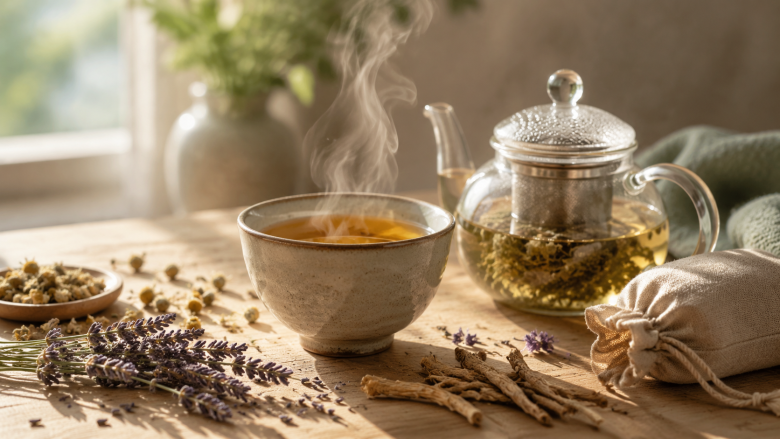
Passionflower works by increasing GABA levels in the brain. But the key to getting its full effect lies in the preparation. The active alkaloids (harman and harmine) and flavonoids are water-soluble but require hot water - not boiling - and a longer steep time. The optimal method: heat water to 195-200°F (just below boiling), pour over 2-3 teaspoons of dried passionflower, and steep for 10-15 minutes. Steep longer than 20 minutes and you start extracting more bitter compounds that can cause nausea.
When I first tried passionflower, I made the mistake of using a teabag and steeping for 3 minutes. I got a pale, floral water that did nothing. After switching to loose herb and a proper steep, the difference was night and day - a distinct calming effect within 20 minutes. That's the difference between a tea that tastes nice and a tea that actually works.
How to Brew Herbal Tea for Maximum Active Compound Extraction
Most people ruin their herbal tea for relaxation by using boiling water and short steep times. Different compounds extract at different temperatures and times. Here's a practical framework I've developed over years of trial and error:
- Roots and barks (valerian, ginger, licorice): Use water at 200-212°F. Steep 10-15 minutes. These require high heat to break down tough cell walls and release volatile oils.
- Leaves and flowers (chamomile, lemon balm, lavender, passionflower): Use water at 190-200°F. Steep 5-10 minutes. Higher temperatures can destroy delicate volatile compounds.
- Adaptogens (ashwagandha, tulsi, rhodiola): Use simmering water (200°F) and steep 10-15 minutes. Many adaptogens are roots and need longer extraction.
Cover your cup while steeping. Many of the active compounds, especially the volatile oils in lavender and lemon balm, evaporate quickly. A lid traps them in the water. Most people don't realize that uncovered steeping can reduce potency by up to 30%.
For a deeper dive on the exact temperatures and times for everyday relaxation, I've written a full guide on how to brew herbal tea for everyday relaxation. It includes a printable cheat sheet I use myself.
What is the Best Herbal Tea to Relax? (A Decision Matrix Based on Your State)
There's no single "best" herbal tea for relaxation - it depends on what kind of "relaxed" you're aiming for. Here's a matrix I use when people ask me this question:
| Your State | Best Herb | Why It Works | Steep Time |
|---|---|---|---|
| Wired but tired (can't sleep) | Valerian + lemon balm | Valerian for GABA, lemon balm for mild calming without sedation | 10-12 min |
| Panic attack or racing thoughts | Passionflower (strong dose) | Fast-acting GABA increase, less drowsy than valerian | 12-15 min |
| General daily stress with no sleep issues | Chamomile + lavender | Mild, safe for daytime, gentle on stomach | 5-7 min |
| Anxiety with digestive upset | Lemon balm + peppermint | Lemon balm for nerves, peppermint for gut | 7-10 min |
| Adrenal fatigue or burnout | Ashwagandha or tulsi | Adaptogens lower cortisol, not immediate but long-term | 10-15 min |
This is based on my own experience brewing for clients and myself. The thing nobody tells you about adaptogens like ashwagandha is that they need to be taken consistently for 2-4 weeks before you notice a shift in baseline stress. They're not a quick fix. If you need immediate relief, reach for a nervine like passionflower or lemon balm.
What Herbal Tea Will Make You Feel More Relaxed? (The Answer Is in the Dose)
This question is often asked by people who have tried a cup of chamomile and felt nothing. The answer is usually: you didn't use enough herb. Most commercial tea bags contain 1-1.5 grams of herb. For a noticeable effect, you often need 2-3 grams per cup, especially for valerian or passionflower.
Let me give you a specific example. A standard chamomile tea bag might have 1 gram of dried flowers. The active compound, apigenin, has a relatively low bioavailability. To achieve a significant anxiolytic effect, you'd need roughly 3-4 bags per cup. That's expensive and impractical. Instead, buy loose herb and use 2-3 heaping teaspoons per cup (about 3-4 grams).
But there's a trade-off: higher doses of some herbs can cause side effects. Too much valerian can cause headaches, dizziness, and grogginess the next day. Too much passionflower can cause nausea. The sweet spot is a dose that gives you a noticeable shift in your state without making you feel drugged.
Start with the lower end of the range, see how you feel after 30 minutes, and adjust. I always tell people: "You can always add more herb, but you can't take it out."
Safety First: Medication Interactions and Contraindications
This is the gap that almost every article on herbal tea for relaxation misses. Just because something is "natural" doesn't mean it's safe for everyone. Here are the most important safety considerations:
- Valerian - Do not combine with alcohol, benzodiazepines, barbiturates, or other sedatives. It can cause excessive drowsiness and respiratory depression. Also avoid if you have liver disease.
- Passionflower - May interact with blood pressure medications and sedatives. Avoid during pregnancy - it can stimulate uterine contractions.
- Chamomile - Belongs to the Asteraceae family (ragweed, daisies). If you have allergies to these plants, avoid chamomile. It can also interact with blood thinners like warfarin due to mild coumarin content.
- Lemon balm - Generally safe, but may interact with thyroid medications (it can inhibit TSH).
- Ashwagandha - Avoid if you have hyperthyroidism, autoimmune conditions, or are pregnant. It can increase thyroid hormone levels.
If you're on any prescription medication, especially for anxiety, depression, blood pressure, or thyroid, consult a healthcare provider before adding herbal teas to your routine. The National Center for Complementary and Integrative Health provides detailed fact sheets on each herb if you want to verify specific interactions.
When Brewing Goes Wrong: Common Mistakes and How to Avoid Them
I've made every mistake in the book. Here are the most common ones I see in practice:
Mistake 1: Using boiling water for delicate leaves. Boiling water destroys the volatile oils in lavender, lemon balm, and chamomile. The result is a flat-tasting, ineffective brew. Use a thermometer or let boiling water sit for 30 seconds before pouring.
Mistake 2: Steeping too short. Most people steep for 2-3 minutes. For roots and adaptogens, that's barely enough to extract anything. Set a timer for at least 10 minutes.
Mistake 3: Reusing herbs. Many people try to get two cups out of the same leaves. The first steep extracts most of the active compounds. The second steep gives you mostly color and flavor, not efficacy.
Mistake 4: Not drinking enough water with it. Herbal teas are diuretic to varying degrees. If you're already dehydrated, the calming effect will be diminished. Drink a glass of water alongside your tea.
When I first started, I used a stovetop kettle and guessed the temperature. I bought a $10 digital thermometer and a cheap mesh strainer, and my tea quality improved dramatically. Small tools make a big difference.
Building a Relaxation Ritual: Beyond the Brew
Drinking herbal tea for relaxation is more effective when paired with a simple ritual. The act of brewing itself - the smell, the waiting, the warmth - activates the parasympathetic nervous system through sensory cues. I've found that combining the tea with a 5-minute breathing exercise amplifies the effect.
One simple technique: after you pour the water, set a timer for the steep time. While waiting, sit comfortably and breathe in for 4 counts, hold for 4, exhale for 6. This activates the vagus nerve, which is the body's main "rest and digest" pathway. By the time you drink the tea, your nervous system is already primed for the herbs to work.
If you want to create a dedicated space for this ritual, I've written a guide on how to set up a cozy corner for relaxation that includes practical tips for lighting, seating, and minimizing distractions. It's a small investment that pays off in consistency.
The Long-Term Approach: Adaptogens for Baseline Stress Reduction
If you're dealing with chronic stress that doesn't go away after a cup of tea, adaptogens might be a better fit. They work differently from nervines: they don't calm you immediately, but they help your body handle stress more effectively over time. Tulsi (holy basil) is my go-to for this. It's a mild adaptogen that also has a pleasing, slightly spicy flavor.
To use adaptogens effectively, you need to think in terms of weeks, not minutes. I recommend brewing a batch of tulsi tea in the morning (using 3 teaspoons per 2 cups of water, steeped 10 minutes) and sipping it throughout the day. It's safe for daily use, unlike valerian, which can cause dependency if used every night for more than 2-3 weeks.
Most people don't realize that adaptogens are cumulative. They work on the HPA axis, gradually recalibrating your cortisol rhythm. If you skip a day, you don't lose progress, but it takes discipline to keep up the habit. I'd suggest pairing it with a morning routine - like the one I describe in 12 ideas for quick home relaxation - to make it stick.
Putting It All Together: Your Personalized Herbal Tea for Relaxation Plan
Here's a step-by-step plan you can implement today:
- Identify your stress type. Acute (racing thoughts, panic) or chronic (low-grade anxiety, burnout)? Use the decision matrix above to pick your primary herb.
- Buy loose herb from a reputable source. Avoid teabags for efficacy - they're cheaper but much weaker.
- Measure your dose. Start with 2 teaspoons per cup for leaves, 1 tablespoon for roots.
- Heat water to the right temperature. 190-200°F for leaves, 200-212°F for roots. Use a thermometer until you can judge by eye.
- Steep for the full time. Set a timer and cover the cup.
- Drink without distractions. No phone, no TV. Sit with the experience for 10 minutes.
- Monitor your response. After 30 minutes, note how you feel. If no effect, increase dose by 1 teaspoon next time. If too strong, decrease.
One more thing: don't expect a miracle. Herbal tea for relaxation is a tool, not a cure. It works best when combined with good sleep, exercise, and stress management. But when you get the science right - the right herb, the right dose, the right brew - it can be a powerful ally.
I've seen people who thought they were "immune" to herbal tea suddenly feel the difference after following these steps. The key is moving from a vague hope to a precise practice. Now you have the knowledge to do that.