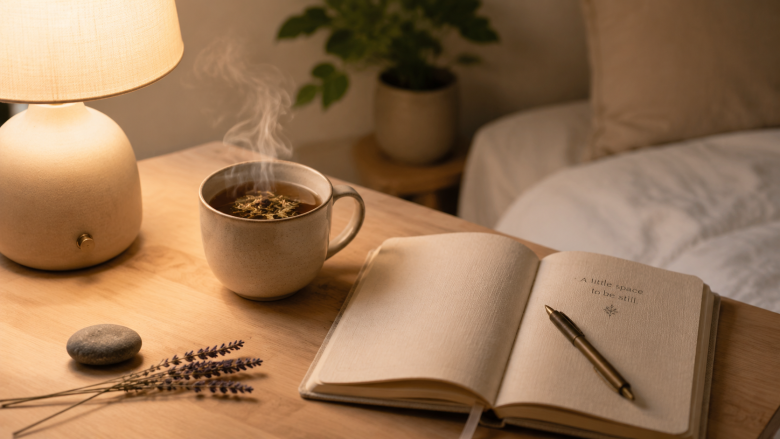
Why Your Evening Ritual Needs a Reset (and Why 5 Minutes Is Enough)
Most people assume a calming evening ritual requires a bath, a candle, and thirty minutes of uninterrupted quiet. I used to think that too. Then I worked a stretch of double shifts in a hospital, sharing a one-bedroom apartment with a partner who also needed to decompress. The idea of a long, luxurious wind-down felt like a luxury I couldn't afford. So I started experimenting with micro-rituals - tiny, science-backed actions that could shift my nervous system from fight-or-flight to rest-and-digest in under five minutes. What I found surprised me: a calming evening ritual does not need to be long. It needs to be deliberate, targeted, and honest about the obstacles you actually face.
This article is not another list of generic tips like "take a warm bath" or "drink chamomile tea." Those can work, but they miss the real problem: most people are too wired, too tired, or too constrained by their environment to execute a perfect routine. Instead, I will walk you through micro-rituals that directly stimulate your vagus nerve, practical adaptations for shared spaces, and a simple framework to build your own ultra-short evening ritual - even if you only have five minutes before your head hits the pillow.
What Exactly Is a Calming Evening Ritual? (And Why "Ritual" Matters More Than "Routine")
A calming evening ritual is a repeatable, intentional sequence of actions designed to signal to your brain and body that the day is over and rest is safe. The word "ritual" is deliberate. A routine is something you do mechanically - brush teeth, wash face, check phone. A ritual involves presence, a clear start and end, and often a sensory anchor. The difference is psychological: rituals create meaning, which amplifies their physiological effect.
When I worked with clients in a high-stress tech environment, I noticed that the most effective evening rituals had three things in common: they were short (under 10 minutes), they engaged the parasympathetic nervous system directly, and they were adaptable to real-world constraints like noise, light, or a partner who snores. The goal is not to achieve perfect calm - it is to create a downward spiral of relaxation that gains momentum as you sleep.
The Science of Calm: How Micro-Rituals Hack Your Vagus Nerve
Your nervous system has two main branches: the sympathetic (fight-or-flight) and the parasympathetic (rest-and-digest). The parasympathetic branch is largely controlled by the vagus nerve, a long cranial nerve that runs from your brainstem to your abdomen. When the vagus nerve is activated, your heart rate slows, your breathing deepens, and your body shifts into repair mode. The problem is that modern life - constant notifications, work email, evening news - keeps your sympathetic system in a low-grade state of alert. A calming evening ritual needs to override that.
Most people don't realize that the vagus nerve can be stimulated in seconds with specific physical actions. The key is understanding that your nervous system responds to bottom-up signals (what your body feels) faster than top-down signals (what you tell yourself). You cannot think yourself calm when you are wired - you have to give your body a physical cue. This is where micro-rituals become powerful.
One of the most effective techniques is box breathing: inhale for four counts, hold for four, exhale for four, hold for four. Repeating this for two minutes can lower heart rate variability and activate the vagus nerve. Another is a cold water splash on the face (the mammalian dive reflex triggers a parasympathetic response). A third is weighted pressure - a weighted blanket or even a heavy pillow on your chest can increase vagal tone. These are not fluffy wellness trends; they are grounded in physiology. For a deeper dive on how to structure a full wind-down around these principles, see our article on how to create a calming evening wind-down routine.
Obstacle #1: "I'm Too Wired to Even Start"
This is the most common barrier I hear. You come home from a stressful day, your mind is racing, and the thought of doing a "ritual" feels like just another task. The solution is to start with a transition ritual that is so short and physical it bypasses your brain's resistance. I call this the "Front Door Reset."
When you walk through the door, do not touch your phone, your partner, or the fridge. Instead, stand in the entryway for 30 seconds. Take three slow, audible exhales. Then touch your fingertips to your collarbone and gently press - this stimulates the vagus nerve through the skin. That is it. The entire thing takes less than one minute. The goal is not to feel calm immediately; it is to interrupt the stress spiral. Most people discover that after the Front Door Reset, they are able to proceed to a longer ritual without feeling overwhelmed.
If you share a space, you can adapt this. One client of mine lived in a studio apartment with a partner who worked from home. They agreed that when either of them arrived, they would tap the doorframe twice as a signal - then the other person would pause what they were doing and make eye contact for a few seconds. That silent acknowledgment was their micro-ritual. It worked because it created a shared boundary between work mode and home mode.
Obstacle #2: "I Share a Bedroom and Can't Dim the Lights or Play Music"
Shared spaces are a major obstacle to evening calm, but they are rarely addressed in typical articles. If you sleep in the same room as a partner, a child, or a roommate, you cannot always control the environment. The solution is personal micro-rituals that require no environmental change.
One of the most effective is self-administered acupressure. Using your thumb and index finger, apply firm pressure to the web of skin between your thumb and index finger on the other hand (the LI4 acupressure point). Hold for 30 seconds, then switch. This is a known technique for reducing tension and can be done lying in bed without disturbing anyone. Another is auditory masking: if you cannot play music, you can use a white noise app on your phone with a single earbud, or simply focus on the ambient sound of a fan. The trick is to create a sensory bubble that does not require dark silence.
Weighted blankets are also a lifesaver for shared spaces. They provide a soothing pressure that does not rely on light or sound. If you cannot afford a weighted blanket, try placing a folded heavy blanket or a stack of pillows on your chest. The pressure stimulates the vagus nerve and can help you fall asleep faster. I have used this technique myself after a late shift when my partner was already asleep.
Obstacle #3: "Racing Thoughts Keep Me Awake"
Racing thoughts are the enemy of a calming evening ritual. The mistake most people make is trying to suppress them. That backfires - the more you try to stop thinking, the more your brain insists on thinking. Instead, use a cognitive micro-ritual that gives your thoughts a structured place to go.
One of the simplest is the "Brain Dump" - but not the standard version where you write everything down for ten minutes. Instead, try a two-minute brain dump with a timer. Set a timer for two minutes. Write down everything that is on your mind, no matter how trivial. When the timer goes off, close the notebook. The key is the time limit: it prevents the brain dump from becoming a rumination session. If you do not have a notebook, use the notes app on your phone, but keep the screen brightness low. Two minutes is enough to offload the most pressing thoughts without getting drawn into a spiral.
Another technique is mental counting with a sensory anchor. Instead of counting sheep (which is too vague), count backward from 300 while gently tapping your fingers in a pattern - thumb to index, thumb to middle, thumb to ring, thumb to pinky. The combination of counting and finger tapping engages both hemispheres of the brain and distracts the default mode network that generates racing thoughts. I have used this after particularly stressful days and found it more effective than any sleep meditation app.
Micro-Rituals for the Time-Poor: A 5-Minute Calming Evening Ritual
If you only have five minutes, here is a sequence that hits all the key points: vagus nerve activation, cognitive offload, and sensory transition. This is the ritual I use on nights when I come home late and need to be asleep in 30 minutes.
- Minute 1: Front Door Reset - Stand still, take three audible exhales, press fingertips to collarbone. Do this as soon as you are in the door.
- Minute 2: Cold Water Splash - Splash cold water on your face for 10 seconds. If you cannot tolerate cold, use lukewarm water and focus on the sensation. Pat dry gently.
- Minute 3: Box Breathing - Sit or lie down. Inhale for 4 counts, hold for 4, exhale for 4, hold for 4. Repeat for one minute.
- Minute 4: Weighted Pressure - Place a pillow or folded blanket on your chest. Breathe slowly, feeling the weight rise and fall.
- Minute 5: Two-Minute Brain Dump - Write down whatever is in your head. Set a timer. When it goes off, close the notebook and turn off the light.
That is it. Five minutes. The whole sequence is designed to be done in a shared space, without special equipment, and without needing a dark room. If you have more time, you can extend any of the steps. For a more comprehensive structure that includes longer activities like gentle stretching or a warm bath, check out our relaxing evening routine to recharge your energy.
Personality-Based Adaptations: Introverts vs. Extroverts
One size does not fit all. The way you calm down depends on whether you gain energy from solitude or from social interaction. Most evening ritual advice assumes everyone is an introvert who loves quiet alone time. But extroverts need a different approach.
For introverts: Your calming evening ritual should minimize sensory input. Use a weighted blanket, dim lights, and avoid conversation. The Front Door Reset is especially important because you need to decompress from the social demands of the day. Consider adding a short solo activity like reading a physical book (not a screen) or listening to instrumental music. The goal is to retreat inward.
For extroverts: You may feel more relaxed after a brief social interaction - a quick chat with a partner, a phone call with a friend, or even a few minutes of low-stakes conversation. The key is to keep it short and low-pressure. A five-minute check-in with your partner about the day can be a calming ritual if it follows a predictable structure: "What was the best part of your day? What was the hardest?" Then stop. Do not let it turn into a problem-solving session. Extroverts also benefit from body-based rituals like dance or movement - even two minutes of swaying to music can help release tension.
If you are not sure which camp you fall into, ask yourself: after a long day, do I crave solitude or connection? The answer determines your ideal ritual. The thing nobody tells you about evening rituals is that forcing yourself to do what works for someone else - like a silent meditation if you are an extrovert - can actually increase stress.
How to Calm Down in the Evening When You Have Zero Energy
There are nights when even five minutes feels like too much. You are bone-tired, your brain is foggy, and you just want to collapse. On those nights, the micro-ritual can be reduced to one thing: the 30-second exhale. Lie in bed. Breathe in normally. Then exhale for as long as you can, making a soft "haaa" sound. Repeat three times. That is it. The extended exhale activates the parasympathetic nervous system because the vagus nerve is connected to the diaphragm. One 30-second exercise can shift your body from fight-or-flight to rest mode. It is not a complete ritual, but it is better than nothing - and on the worst nights, it is enough.
I have used this on nights when I was so exhausted I could not even lift my arms to do the cold water splash. It works because it requires no movement, no equipment, and no mental effort. You can do it while lying in bed, with your eyes closed, in the dark. It is the ultimate fallback for anyone who is time-poor or energy-poor.
What Are Some Good Evening Ritual Ideas? (Beyond the Obvious)
Most lists of evening ritual ideas include things like journaling, herbal tea, and stretching. Those are fine, but they are not always practical. Here are three unconventional ideas that work especially well for people who struggle with traditional rituals:
- Temperature contrast: Alternate between warm and cool sensations. For example, sip a warm herbal tea while holding a cold stone or ice cube in your other hand. The contrast forces your brain to focus on the present moment, which interrupts rumination.
- Scent anchoring: Choose one scent that you only use at night - a specific essential oil, a candle, or even a bar of soap. Smell it for 10 seconds before bed. Over time, the scent becomes a Pavlovian cue for relaxation. I use lavender oil on my pillow, but only a drop - too much can be overstimulating.
- Body scanning with a twist: Instead of a standard body scan (which can be boring), do a "temperature scan" - notice which parts of your body feel warm or cool. Start at your feet, move up. This engages the insula, a brain region involved in interoception, and can be completed in 90 seconds.
These ideas work because they are sensory, short, and adaptable. They do not require a quiet room or a partner's cooperation. For a more traditional approach that includes a full evening wind-down, see our article on evening wind-down routine for restful sleep.
What Are Calming Rituals? (A Precise Definition)
Calming rituals are structured, repeatable actions that activate the parasympathetic nervous system. The word "calming" is not a feeling - it is a physiological state. A true calming ritual does not just make you feel calm; it shifts your body's biology. The key elements are predictability, sensory engagement, and a clear boundary between the ritual and the rest of your day. The best calming rituals are short enough to be sustainable, specific enough to be effective, and flexible enough to adapt to your circumstances.
One common misconception is that calming rituals must be relaxing. They do not. Some calming rituals are invigorating - like a cold water splash - but they still activate the parasympathetic system through the dive reflex. The goal is not to feel sleepy; it is to signal safety. When your body feels safe, sleep follows naturally.
What Is a Nightly Ritual? (And How to Build One That Lasts)
A nightly ritual is a sequence of actions you perform every night before sleep, in the same order, with the same intention. The key is consistency, not duration. A nightly ritual can be as short as three steps: wash face, put on pajamas, do 30 seconds of box breathing. The repetition creates a conditioned response - your brain learns that after step two, the next step is relaxation. This is why even a short nightly ritual is more effective than a long, inconsistent one.
To build a nightly ritual that lasts, start with one action that you already do - like brushing your teeth - and attach one new micro-ritual to it. For example, while you brush your teeth, practice slow breathing. This is called habit stacking. After a week, add one more step. Do not try to change everything at once. The most common mistake people make is designing an elaborate ritual on day one, failing to maintain it, and then feeling guilty. Guilt is the enemy of calm. Keep it small, keep it consistent, and let it grow naturally.
The Role of Evening Meals in Your Calming Ritual
What you eat in the evening affects your nervous system more than most people realize. A heavy meal late at night can spike cortisol and disrupt the parasympathetic response. That does not mean you should skip dinner - it means you should be mindful of timing and content. I recommend finishing your last meal at least two hours before bed, and focusing on foods that are easy to digest, like vegetables, lean protein, and complex carbohydrates. Avoid caffeine, alcohol, and high-sugar foods in the evening, as they can interfere with sleep quality.
For practical tips on what to eat and what to avoid, check out our guide on tips for lighter evening meals. It covers specific meal ideas and timing strategies that support a calm nervous system.
Final Thoughts: The One Thing You Must Do Tonight
If you take nothing else from this article, do this: tonight, before you go to sleep, take three slow, audible exhales. That is your calming evening ritual for tonight. It takes ten seconds. It is backed by neuroscience. It works. Tomorrow, you can add a cold water splash. Or a brain dump. Or a weighted blanket. But start with the exhale. Your nervous system will thank you.
Calming evening rituals are not about perfection. They are about giving your body a signal that it is safe to let go. You do not need a bathroom full of candles or a dedicated meditation spot. You need one minute of intention. That is enough. Start there, and let the ritual grow as you learn what works for you.